ChartMystic
  • How it works
  • Products
  • Live demo
  • Results
  • Pricing
  • Docs
Log inSign up
  • How it works
  • Products
  • Live demo
  • Results
  • Pricing
  • Docs
  • Log in

Documentation

Artemis Pro

InstallationOverviewHow Artemis Pro ThinksReading The ChartTrend EngineSignal ReferenceLiquidity LinesLiquidity GrabsSession BoxesHTF LevelsHTF CandlesHTF Info TableBacktesting And Data WindowSupported Markets And ChartsSettings ReferenceFAQGlossary

Scribe Studio

OverviewAsk for a StrategyPerformanceTrade AnalysisCodeTweaking Your StrategyTransfer to TradingViewThe Strategy LibraryHistory & Saved StrategiesFAQGlossary
ChartMystic
Documentation/Scribe Studio/Transfer to TradingView

Transfer to TradingView

Put the strategy on your own TradingView chart, and use TradingView's report as a second check on the backtest.

The last step in Scribe Studio is putting a strategy on your own chart. Every result carries its Pine Script, and TradingView runs it like any strategy: entries and exits drawn on the bars, and a report of its own underneath. You will need a TradingView account and a desktop browser, since TradingView's Pine Editor is desktop-only. A free TradingView account can paste and run the script.

Transferring a Strategy

1

Press Open in TradingView

Open the run you want in the results panel and press Open in TradingView in the actions row above the tabs. A dialog titled Use on TradingView opens with three short steps, and it ticks each one off as you complete it.
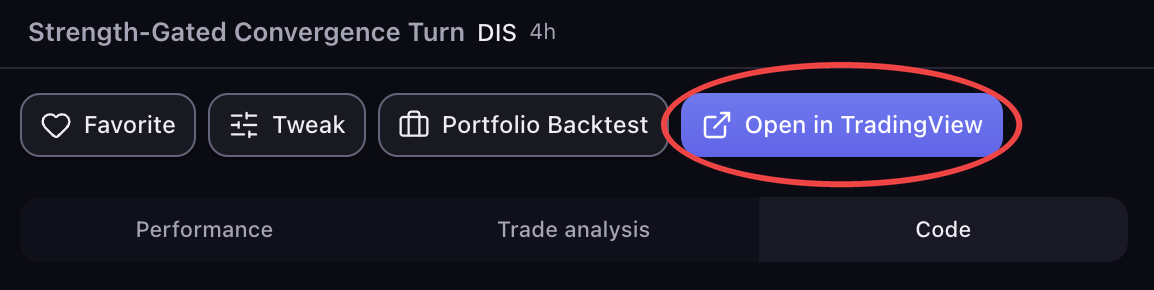
The actions row
Screenshot
The top of the results panel: the run name, the actions row with Open in TradingView circled, and the three tabs
2

Copy the Pine Code

Press Copy in the dialog's first step. "Copied to clipboard" confirms it. The code is the strategy's full Pine Script, the same one on the Code tab, so there is nothing else to fetch. If your browser blocks the clipboard, the step says so; copy from the Code tab instead.
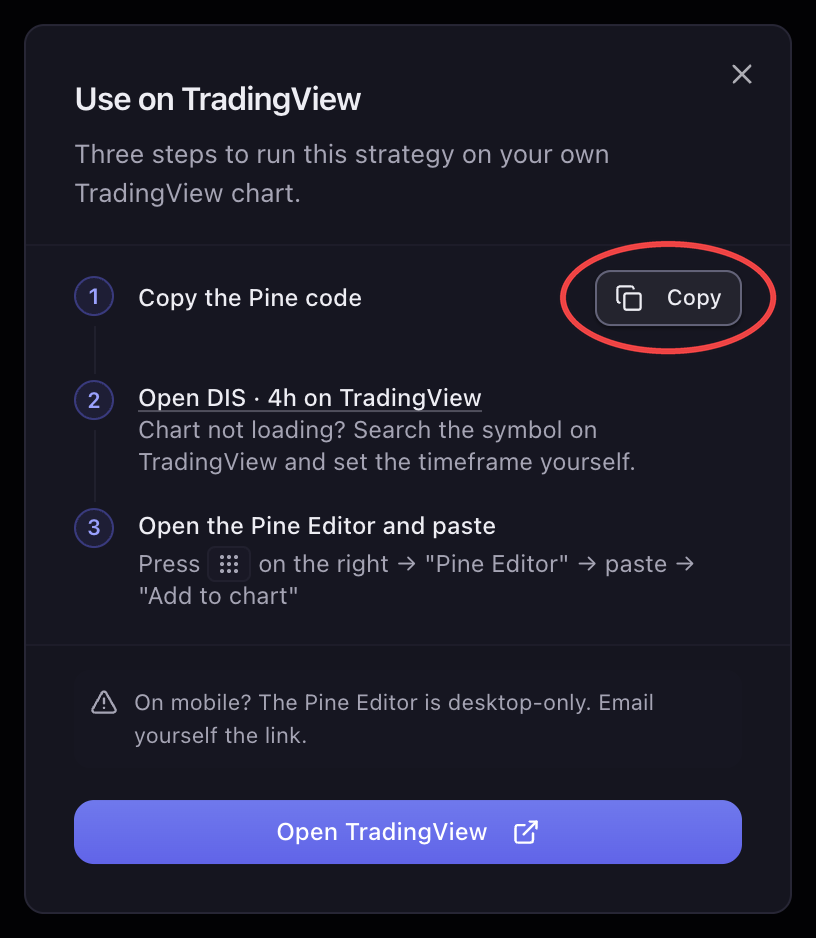
The Use on TradingView dialog with the Copy button on its first step circled
PreviousTweaking Your StrategyNextThe Strategy Library

Need help?

Visual referenceCopy the Pine code

The dialog's first step. Press Copy and the step ticks.

3

Open the Market on TradingView

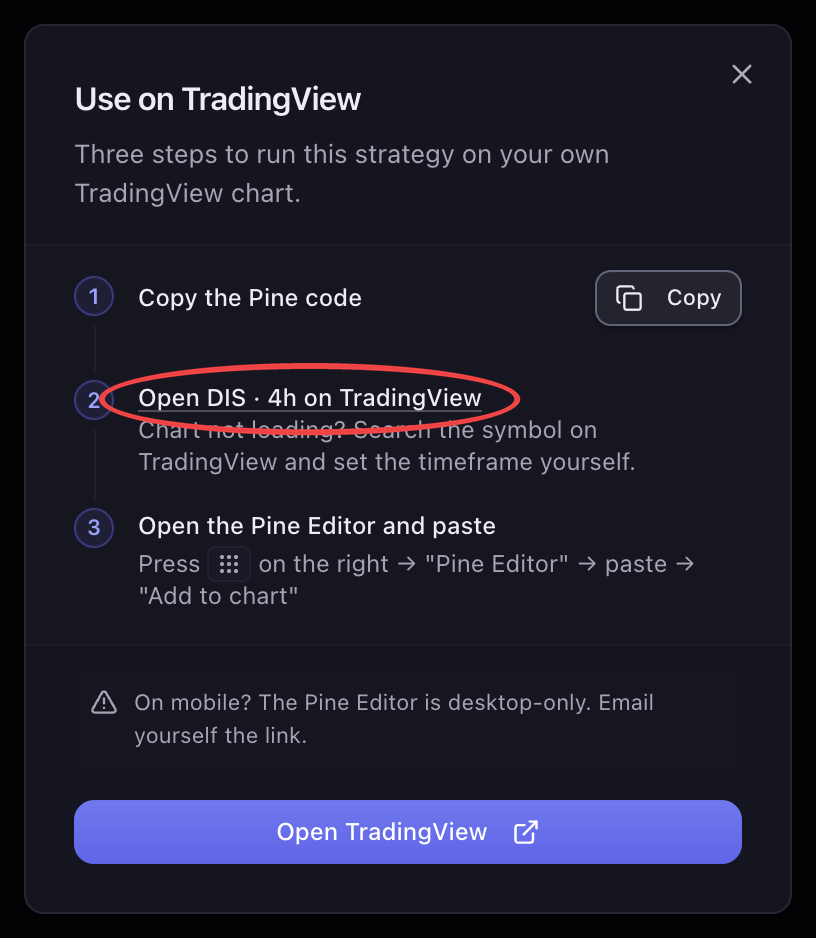
The dialog's second step is a link, for example Open NASDAQ:TSLA · 1h on TradingView. Clicking it opens a TradingView chart on the exact ticker and timeframe the Performance tab's numbers are based on, so it is the easiest way to land in the right place. If the chart does not load, search the symbol on TradingView and set the timeframe to match the run.

The Use on TradingView dialog with the second step's link, Open the symbol and timeframe on TradingView, circled
Visual referenceOpen the market on TradingView

The link opens the chart on the ticker and timeframe the strategy was tested on.

4

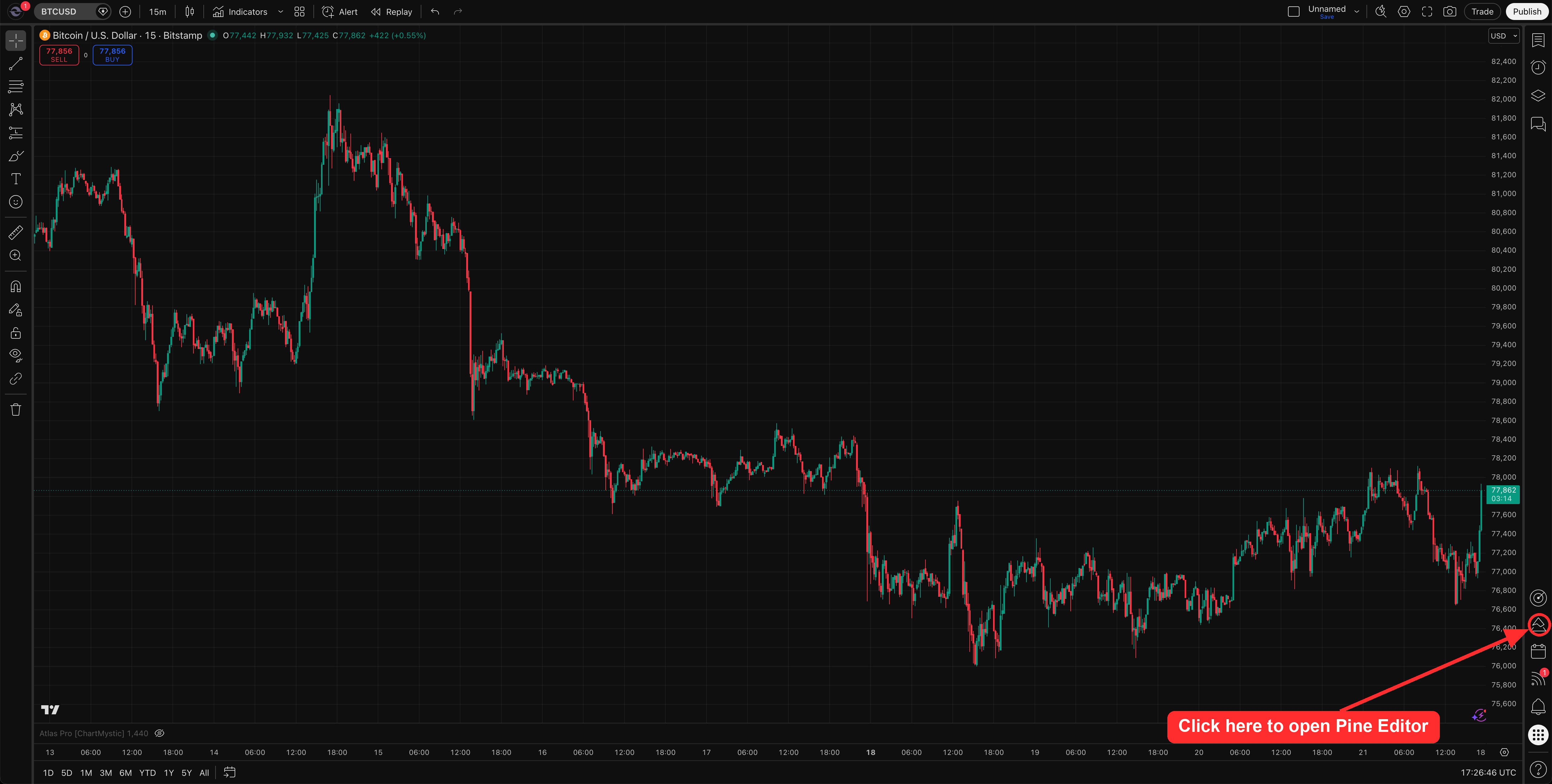
Open the Pine Editor

On the TradingView chart, open the Pine Editor from the right-hand toolbar: the button the screenshot marks, or the nine-dots button and then Pine Editor, depending on your layout. It opens beside the chart with a starter script inside.

Opening the Pine Editor
Screenshot
A TradingView chart with the Pine Editor button highlighted at the bottom of the right-hand toolbar
5

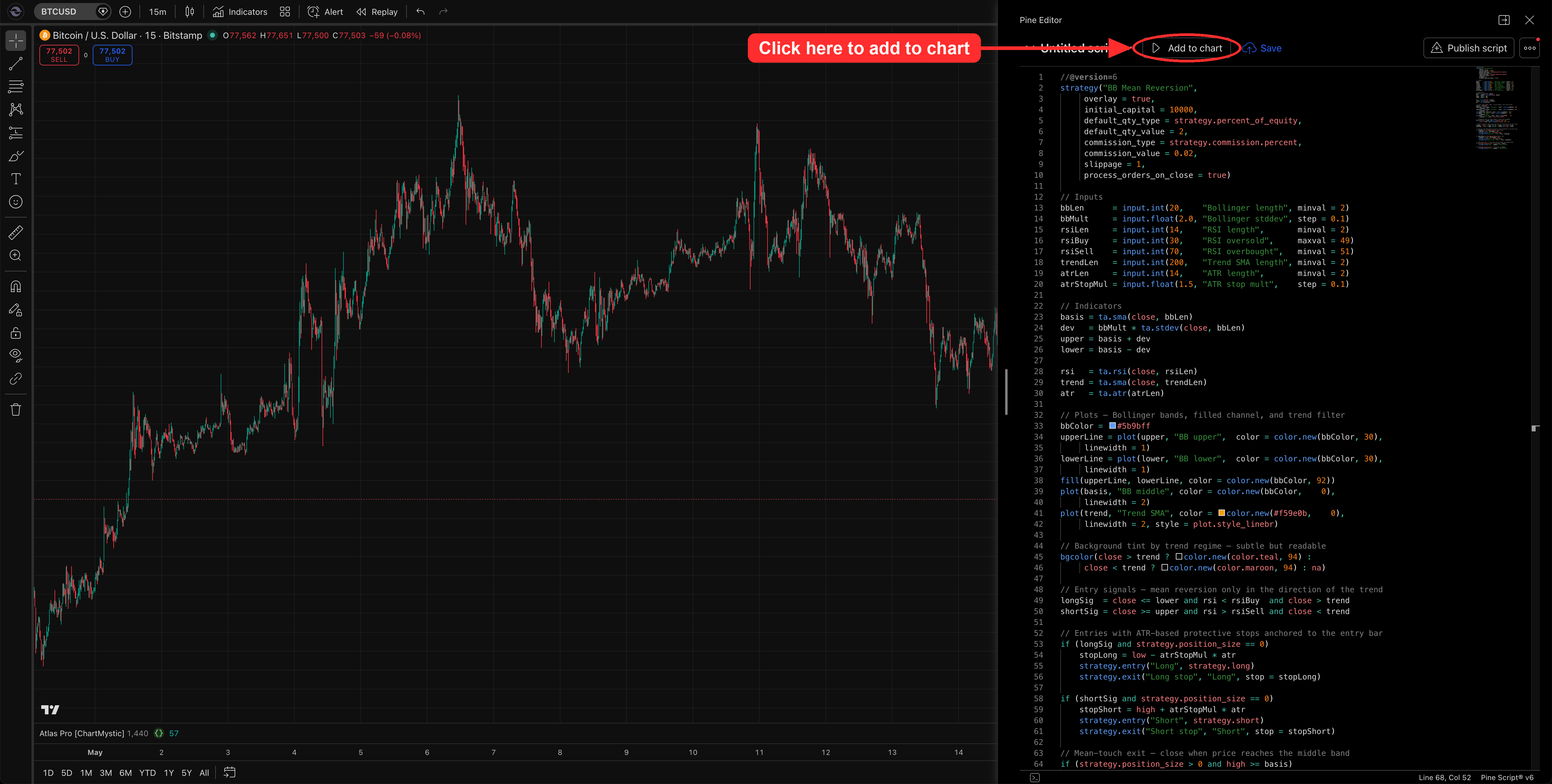
Paste and Add to Chart

Click into the editor, select everything already there, and paste the script over it. Then press Add to chart. The strategy appears on the chart under the same name Scribe gave it, with every entry and exit marked on the bars where the orders would have fired.

Pasting into the Pine Editor
Screenshot
TradingView's Pine Editor open beside the chart with the pasted strategy script inside it, and the Add to chart button highlighted
6

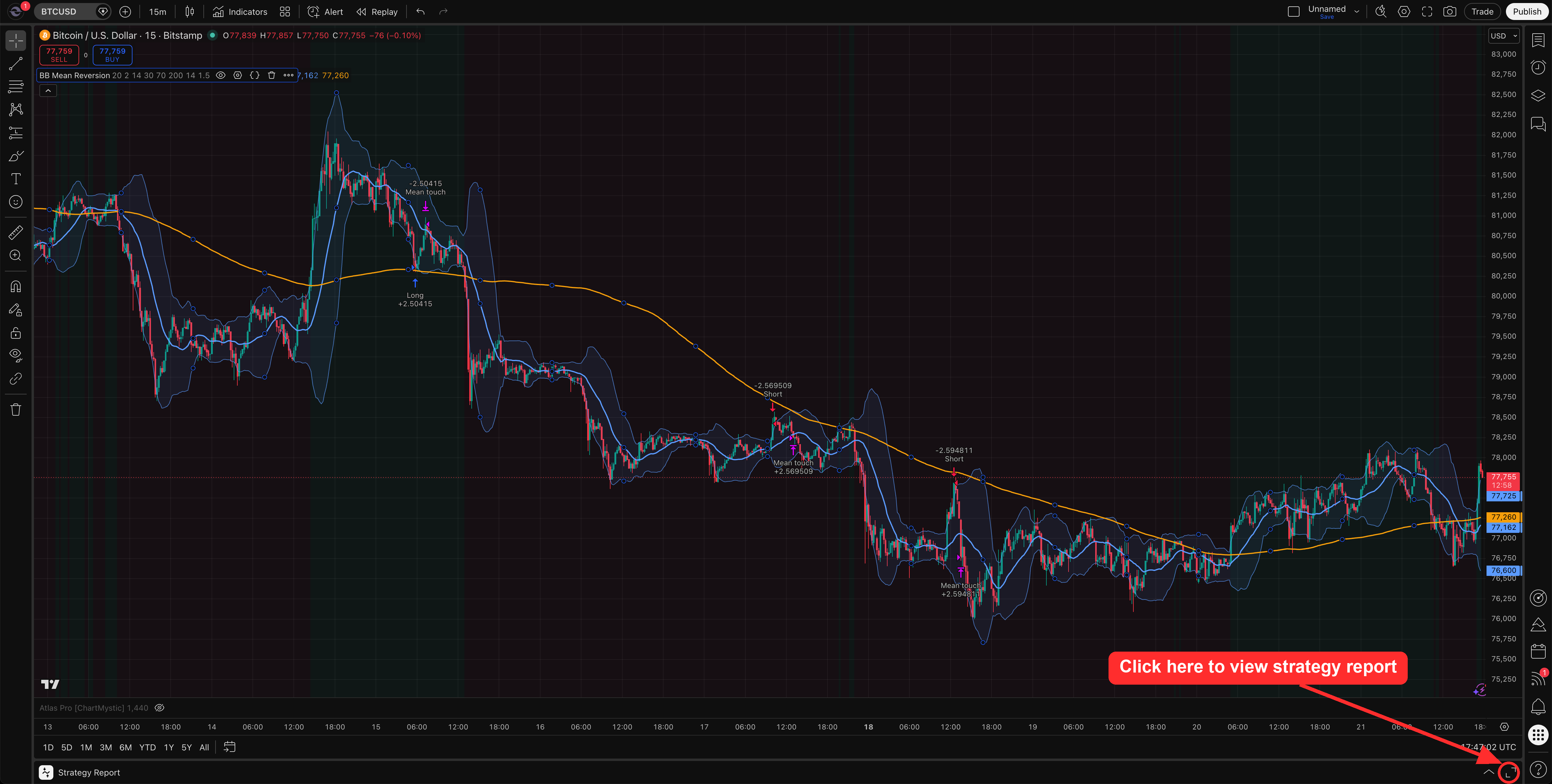
Open the Strategy Report

The strategy's name appears in the bar along the bottom of the chart as soon as it is added. Press the report button at the bottom right of the chart to open TradingView's strategy report. There is no Run button; the report is computed the moment the script is added, and again whenever you change the chart.

Opening the strategy report
Screenshot
A TradingView chart with a Scribe strategy added, its entries and exits marked on the bars, and the strategy report button highlighted at the bottom right

Checking the Backtest in TradingView

Scribe has already backtested the strategy; the numbers on the Performance and Trade Analysis tabs are the result. Once the script is on a TradingView chart, TradingView replays the same rules over its own price history and produces a report of its own, which makes it a useful second check: the same strategy, tested a second time, by a second engine. Two things are worth confirming in the report:

  • The trades. Open List of trades in the report and click a few rows; each jumps to that trade on the chart. The entries and exits should fire where the strategy's rules say, and line up with the trades on Scribe's Trade Analysis tab.
  • The headline figures. Total P&L, Max equity drawdown, Total trades, Profitable trades and Profit factor are TradingView's names for Scribe's Net profit, Max DD, Trades, Win rate and Profit factor. Expect them to be close to Scribe's rather than identical; the two engines run on slightly different price history, and the FAQ explains why. What matters is that the shape of the result holds.

Things to Try in TradingView

The chart is also the easiest place to test assumptions Scribe did not:

  • Costs. The gear beside the strategy's name in the chart legend opens its settings, and the Properties tab holds the commission, slippage, order size and initial capital the report uses. The script carries the commission and order size Scribe tested with, so leave them alone for a like-for-like comparison, or set your own broker's fee and a few ticks of slippage to see what the strategy looks like after real costs.
  • Other markets and timeframes. Change the chart's symbol or timeframe and the report recomputes for it. Portfolio Backtest in Scribe does the same thing in a click, with the result kept beside the original.
  • A date range. Drag the chart to a particular stretch of history, or use the date-range control on plans that offer it, to see how the strategy behaved through one specific period.

For everything the report can do beyond this, see TradingView's Strategies documentation.

Alerts

Scribe itself sends no alerts. Once the script is on your chart, TradingView's own alert system applies to it like any strategy. Set the trigger to Once Per Bar Close: the strategy was tested on closed bars, and any other setting acts on prices that can still move.